
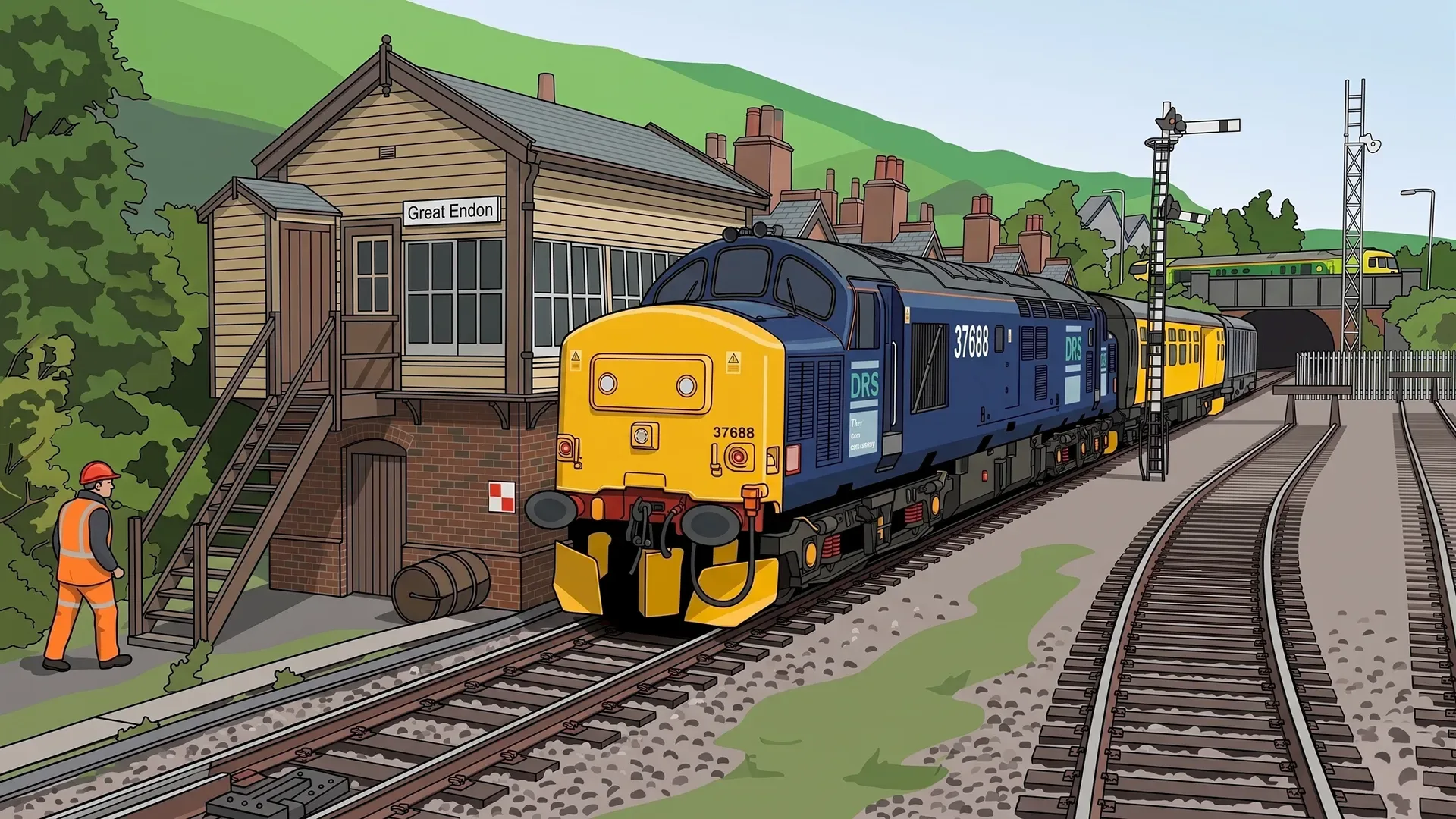
Best OO Gauge Layouts and Why They Work

Some OO layouts stop you in your tracks within seconds. It is not always because they are the biggest, the most expensive, or packed with every possible feature. The best OO gauge layouts usually get the basics right first - believable track planning, reliable running, clear scenic intent, and a sense that the builder knew exactly what they wanted the railway to say.
That matters if you are planning your own build. Looking at the best OO gauge layouts is useful not because they can be copied bolt for bolt, but because they reveal patterns. Certain design choices keep showing up, whether the layout is a compact branch line in a spare room or a large club-built main line with yards, depots, and fully developed scenery.
What makes the best OO gauge layouts stand out
A strong OO layout tends to feel coherent. The track plan, stock, structures, scenery, and operating style all belong to the same world. You can spot when a layout has been built around a clear idea, whether that is a 1960s Western Region branch, a modern image freight route, or a fictional but convincing industrial scene.
The layouts that stay with people usually avoid trying to do everything at once. A compact terminus that handles passenger traffic well can be far more memorable than a larger layout with too many unrelated features squeezed into the same footprint. In OO, where space disappears quickly, discipline is often the difference between impressive and overcrowded.
Reliability is another dividing line. The best-looking scenery in the room loses some of its shine if trains hesitate over points or derail on curves that are too tight for the stock in use. Experienced builders know this, which is why the strongest layouts often look a little restrained on paper. They make room for smoother geometry, easier access, and hidden practical decisions that visitors may never notice but operators always appreciate.
The best OO gauge layouts start with a believable plan
Track planning is where many layouts win or lose before the first scenic layer goes down. Good OO plans are rarely about maximum track length. They are about giving trains a reason to move and a scene a reason to exist.
A branch terminus works well in OO because it creates operation without demanding endless space. One incoming line, a run-round loop, a goods siding or two, and perhaps a small engine facility can keep a session interesting. It also suits the visual strengths of OO, where station detail, platform furniture, road vehicles, and figures all read clearly at normal viewing distance.
Through stations and continuous run layouts can be excellent too, but they need more care. If the train only circles the room with no operational purpose, the layout can feel more like a display oval than a railway. That is not inherently wrong - many people enjoy watching trains run - but the best examples usually add staging, hidden loops, fiddle yards, or freight movements that create traffic patterns rather than motion for its own sake.
End-to-end layouts often punch above their weight because they force every scene to matter. A fiddle yard at one end and a convincingly modelled destination at the other can produce far more satisfying operation than a larger plan with no clear start or finish. If space is limited, this is often the smarter route.
Space matters more than ambition
One of the most common mistakes in OO is scaling up ambition without scaling up the room. OO is forgiving compared with O gauge, but it still needs space for broad-looking curves, realistic station spacing, and scenery that can breathe.
The best builders are honest about footprint. A shelf layout around the wall may produce a better railway than a central board that eats access and forces awkward reach distances. Likewise, a modest single-track line with proper scenic depth often looks better than four parallel tracks pinned to the front edge of a board.
Scenery is not just decoration
The best OO gauge layouts use scenery to support the railway rather than compete with it. That sounds obvious, but it is where average builds often become exceptional ones. Embankments explain why the line sits higher than the road. Retaining walls make urban compression believable. Rows of terraced houses, back gardens, pubs, mills, and loading bays turn track into place.
What sets top layouts apart is observation. British OO layouts are strongest when they reflect how railways actually pass through the landscape. Real lines rarely sit in the centre of wide-open grass unless the location demands it. They cut behind factories, squeeze past warehouses, cross roads at awkward angles, disappear beneath bridges, and emerge into stations shaped by the town around them.
Weathering plays a similar role. The best layouts do not necessarily weather everything heavily, but they use it consistently. Fresh ballast beside a heavily rusted yard can jar unless there is a story behind it. A lightly used preserved line, on the other hand, may look cleaner across the board. Consistency builds credibility.
The right level of detail is the one you can maintain
Detail matters, but there is a trade-off. Highly detailed OO layouts can look superb in photos and at exhibitions, yet every extra figure, fence, oil drum, and signal box interior adds time, cost, and maintenance.
The most effective layouts often put detail where the eye naturally rests - station areas, loading scenes, locomotive facilities, level crossings - and leave quieter stretches to do less. That balance keeps the layout readable. It also prevents the common problem where every square inch shouts for attention and nothing becomes a focal point.
Operation is where good layouts become great ones
A layout can be visually excellent and still feel flat if the trains have nothing meaningful to do. The best OO layouts usually support a style of operation that suits the scene. On a country branch, that might mean a tank engine shunting a goods dock between passenger arrivals. On a modern image layout, it could mean timed freight movements, light engine runs, and platform occupation that changes through a session.
This does not mean every layout needs a formal timetable. It means there should be a logic to movement. Why is that Class 37 here? Where did those wagons come from? Why does the parcels van sit in that siding? Even a simple answer helps the railway feel alive.
Fiddle yards deserve special respect here. They are rarely glamorous, but they are one of the reasons the best layouts keep working. A well-designed fiddle yard expands traffic variety, reduces handling stress, and supports smoother operating sessions. Many builders underestimate this until too late, then realise the visible section is only as useful as the staging behind it.
Era and stock choice can make or break the whole thing
Some of the best OO gauge layouts focus less on broad appeal and more on commitment. Instead of trying to run every favourite locomotive from every decade, they narrow the period and let that choice shape everything else.
That might mean committing to BR blue and modelling the station signage, vehicle fleet, and trackside clutter accordingly. It might mean Southern Region electrification, steam-era rural operations, or contemporary diesel freight. The narrower the era, the easier it becomes to create a layout that feels settled and convincing.
Of course, not everyone wants that level of discipline. Plenty of hobbyists prefer a 'rule one' railway where what pleases the owner takes priority. That is part of the hobby too. But if the goal is to understand why certain layouts attract admiration again and again, focused stock selection is a big reason.
Small layouts can be among the best
There is a persistent idea that the best layouts must be large. In practice, some of the most admired OO layouts are compact because they are tightly edited. They know their job.
A small urban shunting plank can deliver atmosphere, purpose, and superb modelling in a way that a half-finished loft empire cannot. Likewise, a portable exhibition layout often benefits from being designed as a complete scene from day one. The builder has to resolve the viewing angle, scenic breaks, track plan, and operation before construction goes too far.
That focus is worth borrowing even for home layouts. Instead of asking how much railway you can fit in, ask what single scene or operating idea you most want to get right. Build around that. You can always extend later if the plan allows.
How to judge the best OO gauge layouts for your own project
When you are studying layouts for inspiration, it helps to look beyond first impressions. Ask whether the scene has a clear identity. Check if the track spacing looks natural. Notice whether structures sit comfortably in the landscape or feel placed to fill gaps. Watch how trains enter, leave, and cross the scene.
Then be realistic about what applies to your own build. A superb exhibition layout may use stock handling, lighting, or transport arrangements that make no sense in a spare bedroom. A large club layout might rely on several operators. The best ideas are not always the grandest ones. They are the ones you can actually build, run, and enjoy over time.
That is one reason a community-led platform such as ModelRailwayLayouts.com is so useful to enthusiasts. Seeing a wide range of OO layouts side by side makes patterns easier to spot. You begin to notice which design choices repeatedly earn appreciation from fellow modellers, and which impressive-looking ideas create problems in practice.
The layouts people remember are rarely accidents. They come from clear choices, patient editing, and a willingness to serve the railway rather than overload it. If your next OO project starts with that mindset, you do not need the biggest room or the largest budget to build something worth sharing.
Related Posts
Comments (0)
Community Guidelines
Keep all comments friendly. Feedback should be constructive and no derogatory comments are tolerated.
Sign in to join the conversation
No comments yet
Be the first to share your thoughts!